Tuko Wengi reads These Letters End in Tears. Well, it certainly delivered its promise. ⭐⭐⭐⭐
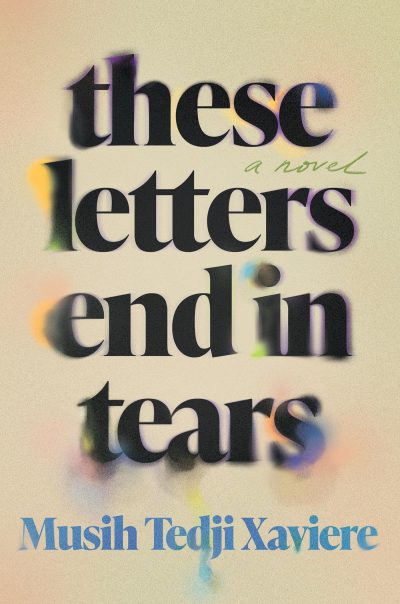
Musih Tedji Xaviere’s debut novel, These Letters End in Tears is a riveting story about being queer in a country that forbids it and outlaws the existence of queer people. The book reads like learning how to ride a bike: you start of apprehensive, afraid of what lies ahead, then the thrill of riding sets in. But eventually you must stop, and the high fades away.
Told in the first person, we see life in Bamenda, Cameroon through a series of letters by the protagonist, Bessem, to her lesbian lover, Fatimatou. It starts off grim; the two are caught in a gay bar by Fatimatou’s homophobic brother and his friends, who brutally beat them before handing them over to the police, where they endure further violence. Bessem, born into privilege, is eventually bailed out by her disappointed parents — unaware that it would be the last time she ever sees Fatimatou.
From then on, Bessem starts writing letters to Fatimatou. Through the letters, we see her evolution from the naive girl who believed love can undo bigotry to a woman scorned by the world, cautious and secretive. She’s now a professor at the local university, friends with Jamal, another closeted professor. And the letters become Bessem’s archive, a place where she retells her stories with Fati. They become her sanctuary, a temple of remembrance for the memories of her lover.
The letters narrate several intertwined tales. Bessem pursues Islam, a decision spurred by Fati’s Islamic background and her love for the religion. She reaches out to Mahamodou, Fati’s brother now turned Imam, and attempts to join Islam under his guidance. Meanwhile, Jamal, grapples with dangerous rumours that he solicited sexual favours from a male student. In a bid to save his career , he resorts to marrying a woman he met in high school who had his eyes on him. He sacrifices an integral part of his identity, and in turn his friendship with Bessem begins to strain.
Lonely and adrift, Bessem turns to Audrey, a bartender she met while out. Although Bessem dislikes her at first, she soon grows fond of her, and they embark on a tentative relationship, hidden from the eyes of society.
Soon, Bessem meets Shari, Mahamodou’s wife, and her life comes unraveling as Shari spills secrets untold to her. Fatimatou is dead, buried under an unmarked grave at her childhood home. She died at the hands of her rage driven brother Mahamodou when she revealed her plans to run away. Desperate for justice, Bessem seeks help from the police only to find Bessem’s grave desecrated by a smirking Mahamodou, who plays shy in the face of the police. In the end, all her searching yields nothing but grief and the bitter ache of what could have been. Bessem’s letters remain unsent, forever.
“Perhaps one day soon, stories like ours will have happy endings” – Bessem’s last letter to Fati.
These Letters End in Tears is a sad tale of love where it’s forbidden, and a brutal reminder that sometimes, it doesn’t work out. It points out the senseless rhetoric behind African homophobia, the glorified public opinion and religious outrage only reserved for queer love. It highlights the cherry picking that justifies blatant bigotry in our society, forgetting that those it persecutes are people who have done nothing more than dare to love.
There’s nothing more I love more than African queer literature. To me, it reads familiar and grounding, in a language and culture I can understand. Although the book’s conclusion was a bit rushed, it was a wonderful short read that had me in tears at the end. Absolutely recommend.


 Colour Collective
Leave a comment