Tuko Wengi reads Brickmakers. And loves it. ⭐⭐⭐⭐
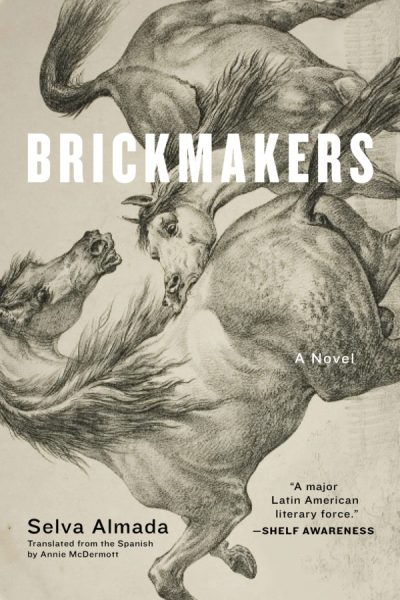
Men come to be like bricks – fired in a kiln, roasted by the flames till they harden. At least, that’s how they are shaped to life in Brickmakers, Selvo Amarda’s 2013 novel and the first installment in her trilogy, followed by he Wind That Lays Waste (2019) and Dead Girls (2020). The book was a spontaneous read, but the taste it left in my mouth was nothing but; it lasted, bittersweet on my tongue.
Set in rural Argentina, it begins with a rather cinematic death scene: two men, Pajaro Tamai and Marciano Miranda, bleeding on the grounds of a travelling fair, one lying face up towards the sky, the other pressed against the earth, both surrounded by the noise of the carnival. Throughout the novel, Amarda uses an informal tone to narrate her story, weaving skillfully between past events in the boys’ lives and the liminal space between life and their imminent death to showcase the events that led to their violent ends.
Through the eyes of the boys, we lay bare the lives of their fathers, men who have been steeped in machismo, dripping from their lips and actions. Oscar Tamai, Pajaro’s father, is a violent drunk and aggressive brute, often flogging Pajaro, for whom he feels a jealous rage, and his wife, Celina. This beating forces Pajaro to embrace his own nascent anger, inheriting his own father’s rage. He grows up defiant, his bravery spurred by his fear, and he even once seizes his father’s whip, shouting as he retreats, “I’m not your goddamn mencho.”. Marciano on the other hand lives with an unbridled, festering rage derived from Elvio Miranda’s death. Shot in the head and his throat slit, Miranda is “killed like a dog”, and his case is never solved. This leaves a despondent eleven year old Marciano dealing with his father’s absence, promising to avenge his death one day.
Their fathers, both brickmakers, were also enemies, driven by their warring personalities rather than direct competition in the trade. Consumed by vice, drinking and gambling, the two almost enter a drunken brawl at a bar, its cause unknown. Their thirst for each other’s blood is subdued by the steady hands of of their friends, but their anger still lies beneath the surface. This begins their lifelong duel only cut short by Miranda’s passing, a duel that is soon inherited by their sons.
Surprisingly, Pajaro and Marciano were once friends. Both part of the same rowdy group of neighbourhood kids, they forge an unlikely bond, driven by their similar tutelage under the group’s leaders, Cabra and Gorgojo, and their fathers’ enmity, which gave their alliance an illicit thrill. However, their friendship is ruined by jealousy, turned rancid by the arrival of Nango who quickly befriends Pajaro.
Their enmity grows as the two grow, morphing and developing in same stride, from boys to men, from petty rivalry to fully-fledged hatred. In a way, Armada draws a dark parallel between the boys. Too alike in their volatile temperament, the two even find sexual fulfilment from the same kind type of woman, until Pajaro’s gaze strays and he finds it, unexpectedly, in Angel, Marciano’s younger brother.
Although Pajaro at first feels a blind-rage towards Angel, vowing to beat him up then “undress [a] girl, whoever she is, throw her down on the bed, and fuck her brains out.”, his rage mellows, giving way to attraction, and eventually, a quiet desire.
“And when Ángel wrapped his arms around his waist, Pajaro felt, at last, the cold inside him begin to fade.”
Marciano soon finds out of the relationship between the two. He cannot even look at his brother; disgusted and furious, he considers beating him up. Instead, he seeks out Pajaro and confornts him on the fairgrounds; drunk and fast-paced is their knife fight, and they both die mutual killers.
In Brickmakers, Armada perfectly encapsulates machismo’s violence through its most fitting vessel, men themselves. The novel lays bare the violence inflicted by the ‘boys will be boys’ statement in La Crucena’s society, where boys who are never limited in their actions grow to be men without limits, whose playful scrimmages grow to be fateful brawls.
The men in Brickmakers read as simple, almost diminished characters, often riddled with vices with no account. They read as beings built from pain and brutality, often neglecting their emotions and vulnerability but in times of carnal sex or drunken violence. The cycle of machismo, Miranda’s gambling and alcoholism and Tamai’s abuse and desertion, bleed into the lives of their sons, Pajaro and Marciano, continuing destruction that ripples through their families. This potrayal is a stark critique of how society has normalised machismo, with a greater analysis of its intersection with poverty, patriarchy, misogyny and homophobia. In Brickmakers, violence is not just what men do, it’s what makes them.
While powerful in its portrayal, some parts of the book flash by too quickly, particularly the romance between Angel and Pajaro which I would have loved more of, and the discontinuous narration may feel disjointed or distracting to some readers.
Feel free to leave a comment!
 Colour Collective
Leave a comment